
Starting a Profitable Plastic Recycling Business in Senegal
Urban expansion and commercial activities in Dakar and Thiès have generated an exponential volume of post-consumer plastic scrap. Two distinct waste streams dominate the local landscape: flexible packaging—primarily low-density polyethylene (LDPE) drinking water sachets and woven polypropylene (PP) sacks—and rigid blow-molded containers made of high-density polyethylene (HDPE).
While Senegal’s updated environmental regulations push for the reduction and systematic recovery of single-use plastics, local conversion capacity has historically lagged behind. Small-scale recyclers predominantly collect, manually sort, and export raw scrap at low margins. Meanwhile, local manufacturers producing garbage bags, agricultural pipes, and everyday household basins import virgin or reprocessed polymer resin at high exchange rates.
Recognizing this economic gap, our client—an established logistics and scrap collector based in Dakar—decided to transition into manufacturing high-purity recycled pellets. Launching an industrial-scale plastic recycling business in Senegal requires machinery that can operate reliably under local conditions while keeping production costs low enough to compete directly with imported materials.
Technical Challenges: High Sand Contamination and Grid Variations
During the initial technical consultation, the client highlighted specific operational hurdles unique to the coastal and Sahelian environments of West Africa:
- Severe Sand Contamination: Post-consumer film collected from Dakar’s municipal streams often carries 15% to 20% fine silica sand and dust by weight. If not separated before thermal processing, this abrasive sand accelerates barrel and screw wear in the extruder, while contaminating the melt and weakening the tensile strength of the recycled pellets. Any commercial plastic washing line in Senegal must incorporate specialized, multi-stage separation systems that discharge grit before the material reaches the thermal stage.
- Extrusion Off-Gassing and Moisture: Recovered water sachets and packaging film frequently retain residual moisture and volatile organic printing inks. In standard single-stage extruders, trapped water and gas create porosity and voids in the regrind, rendering the final product unsuitable for blown film or precision injection applications.
- Operational Economics and Transparency: When evaluating the total project capital expenditure, the client placed a strong emphasis on machine durability versus initial cost. Inquiries regarding the plastic recycling machine price in Senegal often fail to account for maintenance overhead. Deploying low-grade equipment in an abrasive environment leads to frequent barrel changes, ruined cutting tools, and unplanned downtime.
Validating Technology for a Plastic Recycling Business in Senegal: Live Factory Trials
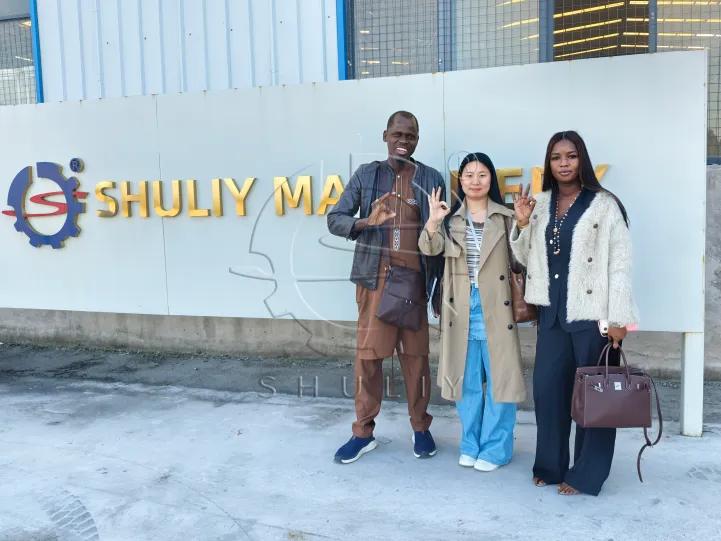
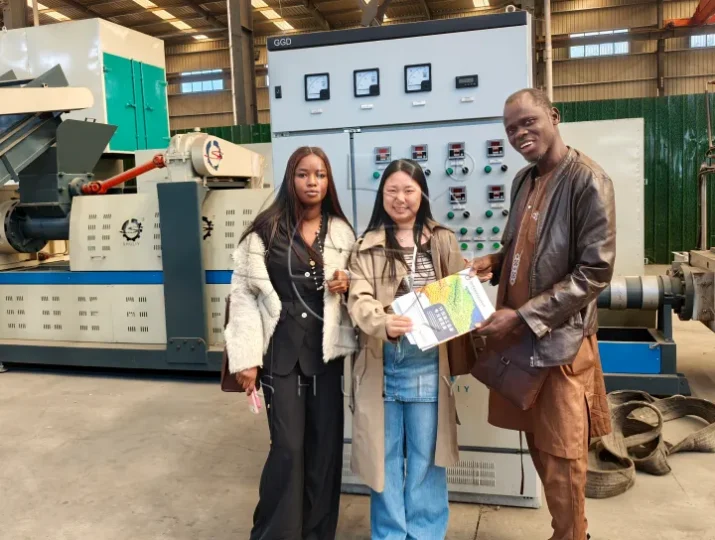
To confirm that the equipment could process contaminated materials to high purity standards, the client visited our manufacturing facility for a comprehensive technical inspection and live trial.
Raw Waste (LDPE Sachets/PP Bags)
│
▼
[SLSP-800 Wet Crusher] ──► Removes coarse sand & reduces size to flakes
│
▼
[High-Speed Friction Washer] ──► Strips embedded dirt & residue
│
▼
[Sink-Float Separation Tank] ──► Gravity separation: heavy silicates sink to bottom
│
▼
[Drying System] ──► Reduces surface moisture below 3%
│
▼
[Two-Stage Pelletizing Unit] ──► Dual-zone vacuum venting removes trapped vapors
│
▼
Uniform, Degassed Recycled Pellets
Trial 1: Wet Crushing via the SLSP-800
The trial began at the front-end reduction station with our SLSP-800 industrial crusher. We loaded contaminated agricultural film and printed LDPE packaging directly into the feed hopper.
Water Injection Mechanism: Operating under wet conditions, the machine injected controlled water directly into the 800 mm chamber during granulation. The water functioned as a continuous cooling medium to prevent thin films from melting around the rotor, while simultaneously dislodging 70% of the surface sand during the cut.
Cutting Geometry: The 10-blade V-type rotor executed continuous progressive shear cuts against the 4 stationary knives, maintaining a tight 0.5 mm tolerance. Flakes passed through a ø26 mm screen without clogging, producing uniform pieces ready for the subsequent washing process.
Trial 2: Two-Stage Extrusion with Continuous Vacuum Degassing
The washed and dried flake was then routed to the heart of the workshop: an advanced, energy-efficient linha de peletização de plástico configured specifically for flexible packaging.
- Bimetallic Metallurgy: The client inspected the primary and secondary screws, crafted from 38CrMoAlA alloy steel treated with deep gas nitriding to achieve a surface hardness exceeding HV 950. This depth of wear-resistant hardening is essential to counter the abrasive wear typical of African post-consumer scrap.
- Dual-Venting Performance: The two-stage (mother-baby) extruder processed the feed material across two independent processing barrels. The primary extruder melted the material and pushed it past dual natural and vacuum venting ports, drawing out remaining water vapor and ink residues. The melt was then passed to the secondary extruder for pressure stabilization and filtration.
- Hydraulic Non-Stop Screen Changing: To simulate high-dirt scenarios, the team demonstrated the hydraulic screen changer. Plate shifts occurred in less than 2 seconds without stopping the main drive or interrupting melt flow, eliminating production halts during filter replacements.
The extruded strands entered a water-cooling bath before feeding into the pelletizadora, generating uniform, dense granules with zero internal porosity. As an established configuration for a plastic pellet machine, the unit demonstrated consistent melt density throughout the four-hour operational run, verifying its suitability as a heavy-duty plastic pelletizing machine West Africa operators can rely on.
Engineering Your Recycling Facility
Establishing a robust plastic recycling business in Senegal requires reliable machinery engineered around local operating conditions. Beyond standalone equipment, our engineering team supplies complete plant layouts, detailed foundation diagrams, and water-treatment designs engineered to handle municipal waste across West Africa.
Contact our project engineering team today to review your target raw materials, schedule a personalized factory trial, or obtain an itemized technical quotation for your production facility.