
PP is a semi-crystalline material. It is harder and has a higher melting point than PE. Since the PP temperature of the homopolymer type is very brittle when it is higher than 0 ° C, many commercial PP materials are random copolymers of 1 to 4% ethylene or a clamp copolymer of a higher ratio of ethylene. The copolymer type PP material has a low heat distortion temperature (100 ° C), low transparency, low gloss, low rigidity, but has a stronger impact strength.

The strength of PP increases as the ethylene content increases. The Vicat softening temperature of PP is 150 °C. Due to the high degree of crystallinity, this material has excellent surface stiffness and scratch resistance. There is no environmental stress cracking problem in PP. The PP is usually modified by adding glass fibers, metal additives or thermoplastic rubber.

PP的流量速率的MFR范围从1到40。低MFR的PP材料具有更好的抗冲击性,但延展性较差。对于相同MFR的材料,共聚物类型的强度高于均聚物类型。 PP PE 片材产品回收和造粒机
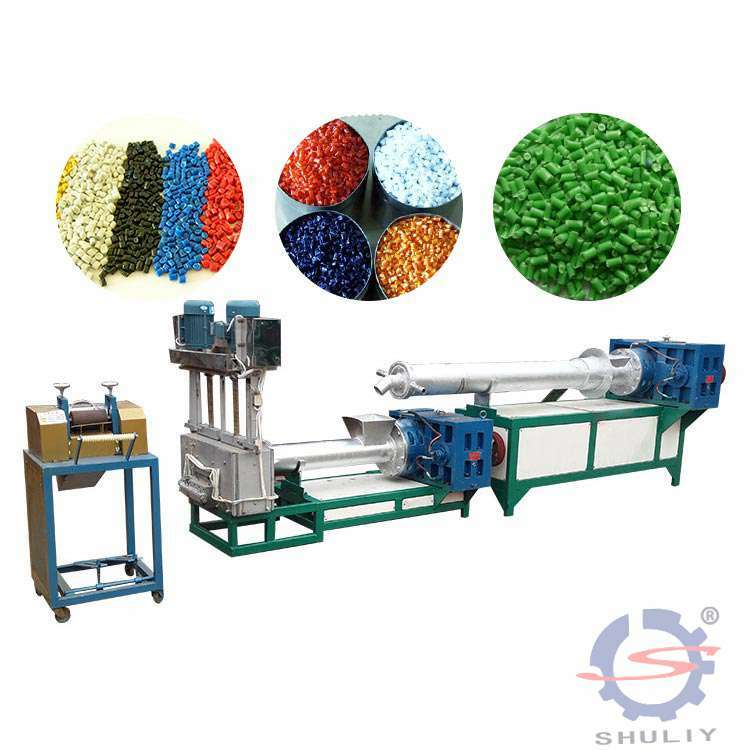
Due to crystallization, the shrinkage rate of PP is quite high, generally 1.8 to 2.5%. And the direction uniformity of shrinkage is much better than materials such as PE-HD.

The addition of 30% glass additive can reduce the shrinkage to 0.7%. Both the homopolymer type and the copolymer type PP materials have excellent moisture absorption resistance, acid and alkali corrosion resistance, and solubility resistance. However, it is not resistant to aromatic hydrocarbons (such as benzene) solvents, hydrogen chloride (carbon tetrachloride) solvents, and the like.

PP does not have oxidation resistance at high temperatures like PE, and it is harmful to the human body.

日常生活中使用的一次性杯子通常由PC和PP塑料制成。

PC是一种无定形工程材料,具有卓越的抗冲击强度、热稳定性、光泽、抑菌性、阻燃性能和抗污渍能力。PC的间隙

强度非常高,收缩率非常低,一般为0.1%到0.2%。PC具有良好的机械性能,但流动特性较差,因此这个

材料的注塑过程是困难的。在选择使用哪种优质PC材料时,应基于产品的最终期望。如果塑料部件需要高抗冲击性,则应使用低流动性材料。

动能PC材料;相反,高流动性PC材料可用于优化注塑过程。

PP聚丙烯:熔化温度:220~275 °C。