
Sincronización de Escamas a Pellets: Cómo la Pureza del Lavado Protege su Línea de Peletización de rPET
Tratar los procesos de lavado y extrusión como operaciones aisladas es un error costoso. La calidad de salida de su línea de lavado de PET aguas arriba determina directamente el tiempo de actividad operativa, la tasa de desgaste del husillo y la calidad final de la resina de su línea de peletizado de rPET aguas abajo.
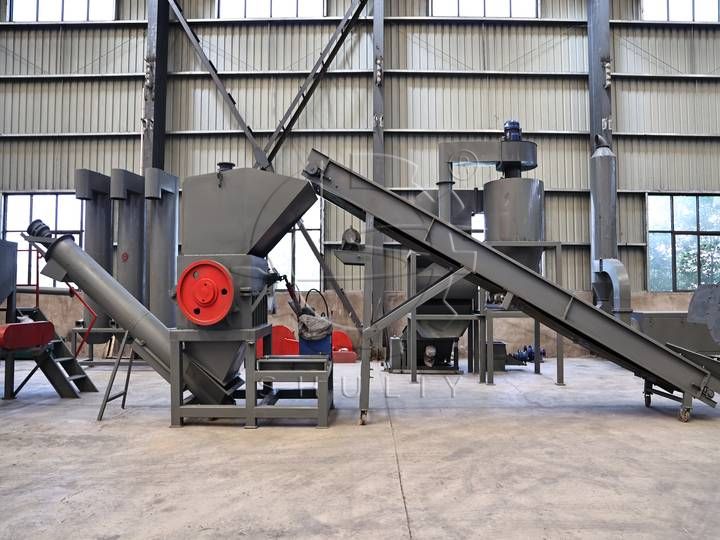
Alimentar un extrusor con escamas mal lavadas y húmedas provoca fallos rápidos en la bomba de vacío, obstrucción de filtros y una grave caída de la viscosidad (IV). A continuación, se presentan los tres parámetros críticos que Shuliy sincroniza para proteger su inversión en extrusión.
1. Control de Humedad: Deteniendo la Hidrólisis Térmica a 280°C
El PET es altamente higroscópico. Si las escamas ingresan al extrusor con un alto contenido de humedad, el agua desencadena una hidrólisis térmica instantánea a 280°C. Esta reacción química rompe las cadenas del polímero, reduciendo permanentemente la viscosidad intrínseca (IV) y produciendo pellets quebradizos y de bajo valor.
- El objetivo: La humedad debe mantenerse estrictamente por menos del 0.5% para una extrusión estable.
- La Solución Shuliy: Nuestra secadora centrífuga horizontal de alta velocidad elimina mecánicamente el agua superficial hasta un 3%, seguida inmediatamente por nuestra tubería de secado térmico en línea para evaporar la humedad interna antes de que el material ingrese al extrusor.
2. Extracción de polvo fino: Protección del sistema de desgasificación al vacío
Durante la extrusión, un sistema de desgasificación al vacío de múltiples etapas aplica presión negativa (-0,08 a -0,1 MPa) para extraer volátiles y gases del fundido. Sin embargo, si su trituradora genera demasiado micropolvo (finos):
- Obstrucción del vacío: Con alto vacío, el polvo ligero de PET es succionado del baño de fundido, obstruyendo los puertos de vacío y dañando las bombas de vacío.
- Formación de puentes en la alimentación: El polvo fino se funde prematuramente en la boca de alimentación, creando obstrucciones pegajosas que detienen el flujo de material.
- La Solución Shuliy: Integramos un ciclón separador post-lavado que extrae el polvo ligero y las etiquetas del flujo de escamas, asegurando que solo escamas limpias y uniformes lleguen a la boca de alimentación.
3. Eliminación de álcalis: Prevención de espumación y amarilleo del fundido
El lavado en caliente utiliza sosa cáustica (NaOH) para eliminar los adhesivos. Si las escamas no se enjuagan a fondo, pequeñas cantidades de NaOH entran en la extrusora y actúan como catalizador de degradación bajo el efecto del calor.
Esto hace que la masa fundida forme espuma (sobrecargando los respiraderos de desgasificación) y oxida el plástico, haciendo que los pellets se vuelvan amarillos.
- La Solución Shuliy: Colocamos tanques de enjuague en flujo continuo con agua profunda después de nuestros lavadores en caliente para diluir y aislar los residuos químicos, manteniendo el pH final de la escama estrictamente por debajo de 8.0.
Especificaciones sincronizadas: Salida de la línea de lavado vs. Entrada de la extrusora
| Parámetro de la escama | Riesgo en el proceso | Solución Shuliy Machinery | Su ventaja en extrusión |
|---|---|---|---|
| Contenido de humedad | Provoca hidrólisis; reduce la viscosidad intrínseca | Centrífuga horizontal + tubería de aire térmico | Viscosidad intrínseca constante; pellets de alta resistencia |
| Finos de PET (polvo) | Obstruye las bocas de vacío; provoca puentes | Desempolvador ciclónico integrado | Vacío continuo; alimentación de material estable |
| pH residual | Desencadena espumado y amarilleamiento | Enjuague multietapa en aguas profundas (pH < 8) | Pellets transparentes de grado premium |
Al mantener los resultados mecánicos y químicos de la etapa de lavado dentro de los estrictos límites de su línea de peletización de rPET, Shuliy Machinery garantiza una planta de lavado a pellet confiable y continua, con un tiempo de inactividad mínimo y el máximo valor del pellet.