廃プラスチックはプラスチックペレット機でどのように再生されますか?
プラスチック製品は私たちの生産と生活に多くの便利さを提供します。これは良い面です。一方で、それは私たちの生活の中で最大の汚染源の一つを引き起こします。それは自然に分解されず、プラスチックペレット機がうまく解決します。この汚染は廃プラスチックのリサイクルを実現しました。

廃プラスチックはどのように再生されるのか? プラスチックペレットマシンで詳しく見てみましょう
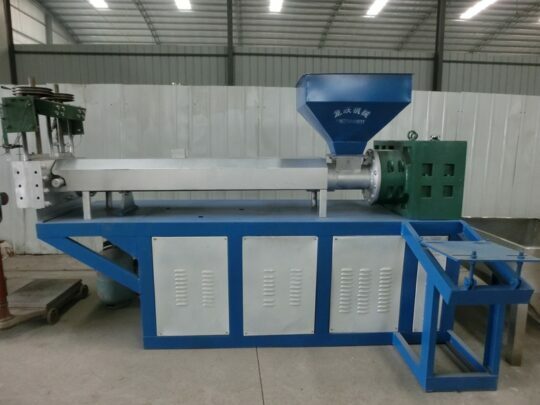
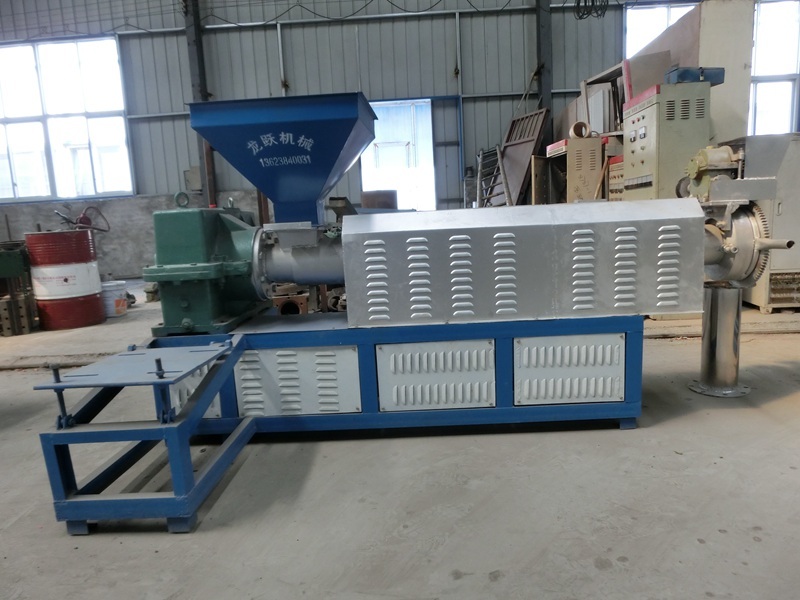
After the plastic is added to the hopper, the hopper falls smoothly onto the screw and is bitten by the screw thread. As the screw rotates, the thread is forced to advance toward the head to form a mechanical conveying process.
When the plastic is running from the feeding port to the pelletizer machine head, the thread depth of the screw is gradually reduced, and due to the resistance of the filter screen, the manifold and the head, high pressure is formed during the plasticizing process, and the material is pressed very much.
密度化はその導熱性を改善し、プラスチックが迅速に溶けるのを助けます。同時に、徐々に増加する圧力により、ペレット間に元々存在していたガスが通気口から排出されます。
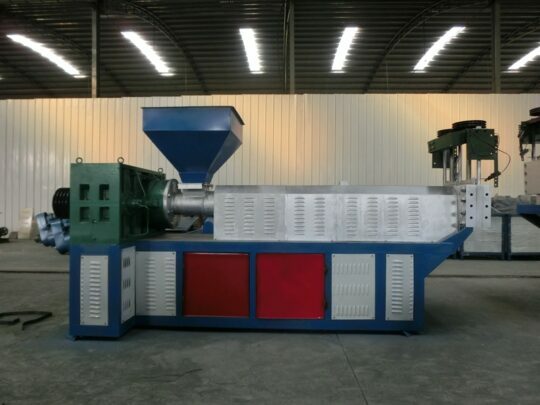
While the pressure is rising, the plastic is heated on the one hand by the outside. On the other hand, during the movement of compression, shearing, and agitation, the plastic itself generates a large amount of heat due to internal friction.
Under the combined action of external force and internal force, the plastic The temperature gradually increases, and its physical state also undergoes a change in the glass state, a high elastic state, and a viscous flow state.
Generally speaking, in the feeding, the glass state is mainly in the middle portion of the compression section where the screw thread is gradually reduced, the material is mainly in a high elastic state, and gradually melts, and the material is in a viscous state at the rear and the squashing section of the compression section.
This is that the plastic has been completely plasticized, and the plasticized plastic is pressed, quantitatively and uniformly continuously extruded from the machine head by screw inference.