플라스틱 제품은 우리의 생산과 생활에 많은 편리함을 제공합니다. 이것이 좋은 점입니다. 다른 한편으로는 우리 삶의 가장 큰 오염원 중 하나를 야기합니다. 자연적으로 분해되지 않으며, 플라스틱 펠렛 기계가 이 문제를 잘 해결합니다. 이 오염은 폐플라스틱 재활용을 현실화했습니다.

폐기물 플라스틱 과립화 압출기

폐플라스틱은 어떻게 재활용될까요? 플라스틱 펠렛 기계좀 더 자세히 살펴보겠습니다.

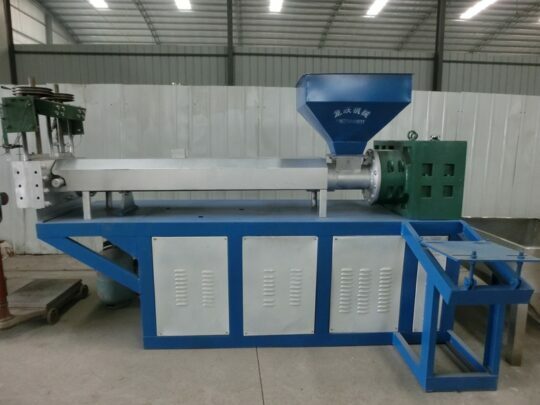
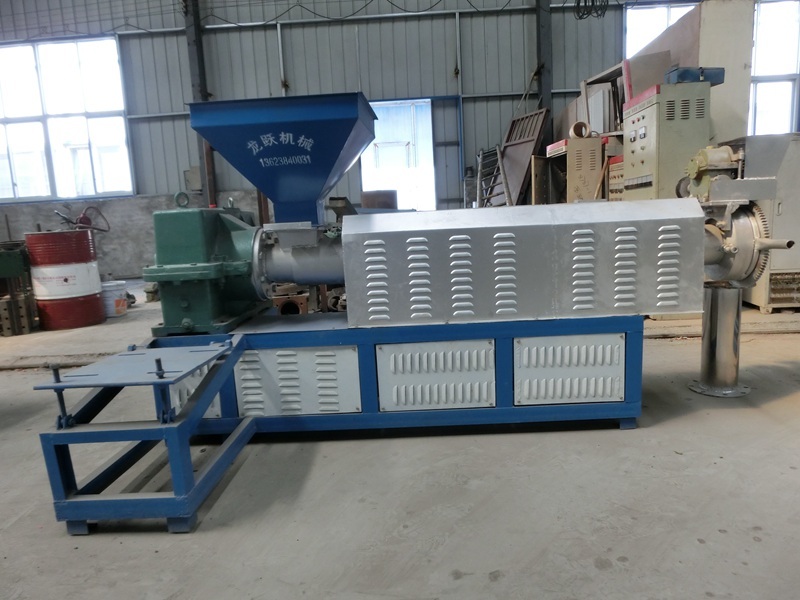
After the plastic is added to the hopper, the hopper falls smoothly onto the screw and is bitten by the screw thread. As the screw rotates, the thread is forced to advance toward the head to form a mechanical conveying process.

When the plastic is running from the feeding port to the pelletizer machine head, the thread depth of the screw is gradually reduced, and due to the resistance of the filter screen, the manifold and the head, high pressure is formed during the plasticizing process, and the material is pressed very much.

밀집화는 전도 열을 개선하고 플라스틱이 빠르게 녹도록 돕습니다. 동시에 점차 증가하는 압력은 펠릿 사이에 원래 존재하던 가스가 배출구를 통해 배출되도록 합니다.
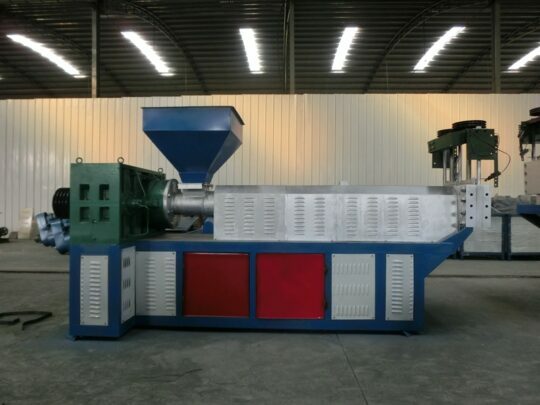
Plastic pellet machine with hopper and screw extruder for recycling waste plastic

While the pressure is rising, the plastic is heated on the one hand by the outside. On the other hand, during the movement of compression, shearing, and agitation, the plastic itself generates a large amount of heat due to internal friction.

Under the combined action of external force and internal force, the plastic The temperature gradually increases, and its physical state also undergoes a change in the glass state, a high elastic state, and a viscous flow state.

Generally speaking, in the feeding, the glass state is mainly in the middle portion of the compression section where the screw thread is gradually reduced, the material is mainly in a high elastic state, and gradually melts, and the material is in a viscous state at the rear and the squashing section of the compression section.

This is that the plastic has been completely plasticized, and the plasticized plastic is pressed, quantitatively and uniformly continuously extruded from the machine head by screw inference.